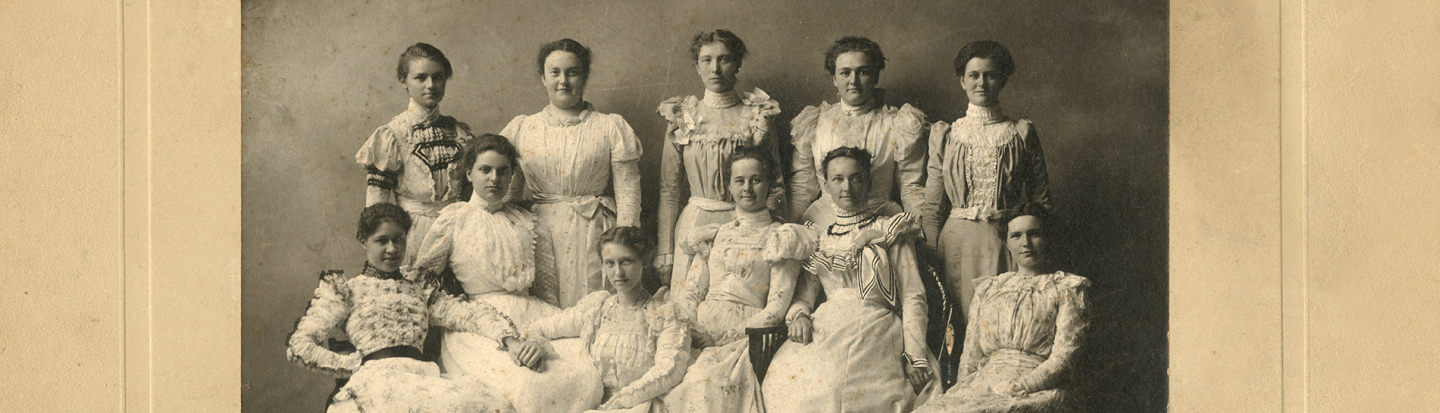
On Demand: Tracing Women in Your Family Tree
Women make up 50% of your ancestry, yet their lives, experiences, and even complete names are all too often forgotten by written history. This course will help you reclaim their stories by providing resources and strategies for finding maiden names, discussing women’s legal rights through history as they pertain to genealogical documents (such as land and probate records, voting lists, naturalization, etc.), uncovering material and written culture left behind, and using mitochondrial DNA to trace maternal lines.
NEW! This course also includes two virtual office hours with instructors (Friday, September 11 and Friday, October 2 at 1:00 p.m. Eastern Time.) These informal, sessions offer an opportunity for participants to drop in to ask additional questions, see demos as they arise, and more. (These informal sessions will not be recorded.)
September 1 - Class 1: Finding Elusive Maiden Names
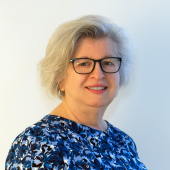
Presented by: Melanie McComb
Learning about your female ancestors and their families is dependent on knowing her maiden name. Unfortunately, all too often we find women listed by their married names only or that their maiden name is simply not recorded. Learn what records are most likely to provide this information and gain important strategies for finding that elusive maiden name.
September 8 - Class 2: Legal Rights of Women in America
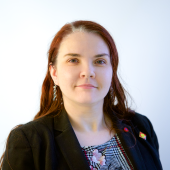
Presented by: Rhonda R. McClure
Understanding women’s legal rights in America can help provide expectations for when women might appear in records, help define their roles in said records, and lend context for understanding your ancestors’ lives. In this class, Rhonda R. McClure outlines the rights and roles of women in documentary history and provides a number of examples, especially as it applies to land, probate, voting, and naturalization.
September 11 - Virtual Office Hour
This informal session offers an opportuntity for participants to drop in virtually and ask additional questions, see demos as they arise, and more. These sessions will not be recorded.
September 15 - Class 3: Researching Women in the Archives
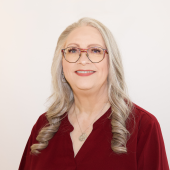
Presented by: Judy Lucey
Although women were often overlooked in official records, throughout time they have been the keepers of family and personal history. When they survive, diaries, letters, account books, family bibles, samplers, organization records, and more can reveal more about a woman’s daily life than any government document. Judy Lucey discusses how these unique records and manuscripts can be used to piece together a family story and how digging in the archives can hit genealogical gold.
September 22 – Class 4: Women and Naturalization
Presented by: Rhonda R. McClure
For much of American history, women’s paths to citizenship were shaped by laws that often tied their status to fathers, husbands, and broader ideas of nationality. At one time, an American-born woman could even lose her citizenship if married to a non-naturalized man. Discover how changing laws affected women’s citizenship and what naturalization records can (and cannot) reveal about female ancestors.
September 29 - Class 5: Using mtDNA to Trace Female Ancestors
Presented by: Melanie McComb
Advances in DNA research over the last decades have had huge implications for the field of genealogy. Testing mtDNA in particular can lead to discoveries along your maternal line—both in the recent and distant past. Using a number of case studies, Melanie McComb demonstrates how mtDNA results can help you verify hypotheses, make connections, and trace female ancestors.
October 2 - Virtual Office Hour
This informal session offers an opportuntity for participants to drop in virtually and ask additional questions, see demos as they arise, and more. These sessions will not be recorded.