
New England was home to some of the earliest British colonial settlements in North America. The region’s inhabitants created the political, economic, religious, and cultural foundations of the future United States. They also left many records of their daily lives, all rich resources for today’s family historians. American Ancestors has one of the largest collections of information about early New Englanders anywhere in the world.
Colonial New England at a Glance
The region that came to be known as New England was inhabited by tens of thousands of people belonging to the Wampanoag nation, who had
lived there for 12,000 years.
People lived in small, tightly knit towns, largely because church and community life was vital, creating a more urbanized society compared to the sprawling, rural Southern colonies.
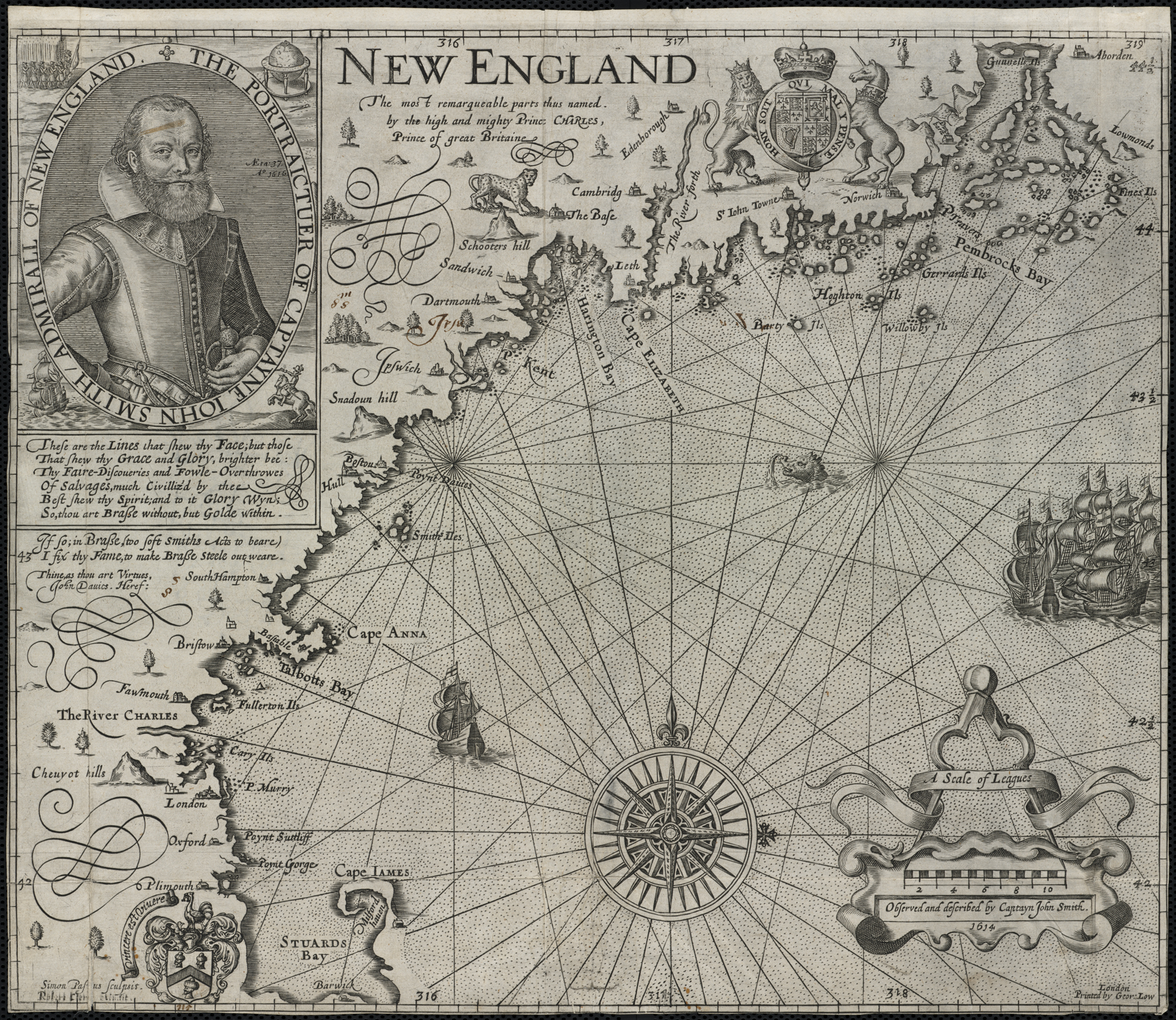
The earliest New England colonies included Massachusetts Bay (1630), Plymouth (1620, later absorbed by MA), Rhode Island (1636), Connecticut (1636), and New Hampshire (1623).
The climate and rocky soil made large-scale agriculture difficult, so early settlers created an economy based on fishing, whaling, shipbuilding, logging, trade, and small family farms.
Life for the religious setters centered around church and town meetings, resulting in early self-government structures like the Fundamental Orders of Connecticut and the Mayflower Compact.
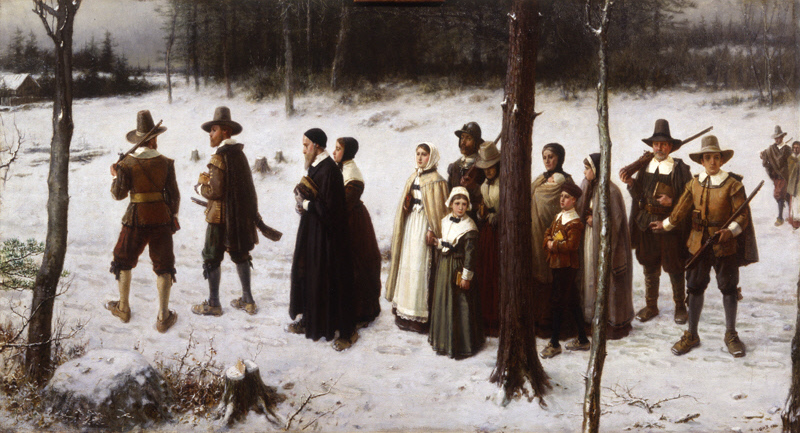
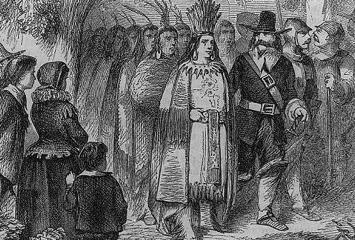
Prominent individuals from the first generation of setters expressed intentions of dealing fairly with Native Americans, owing partly to moral values and also to self-preservation. After setters gained a secure foothold, their treatment of Native peoples deteriorated.
Who Were the New England Settlers?
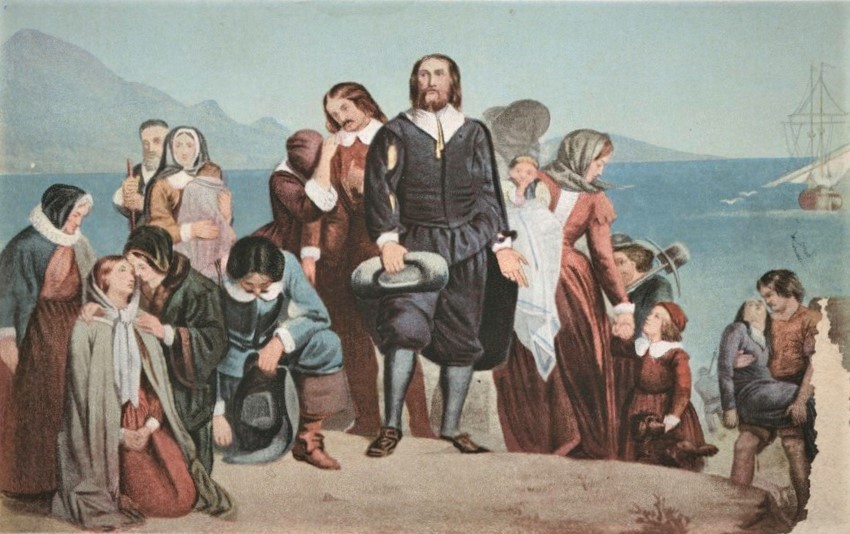
In 1620, the Mayflower carried 102 passengers and a crew of approximately 30 from England to America who arrived in what is now Cape Cod in November 2026 and soon after established the first permanent settlement in New England.
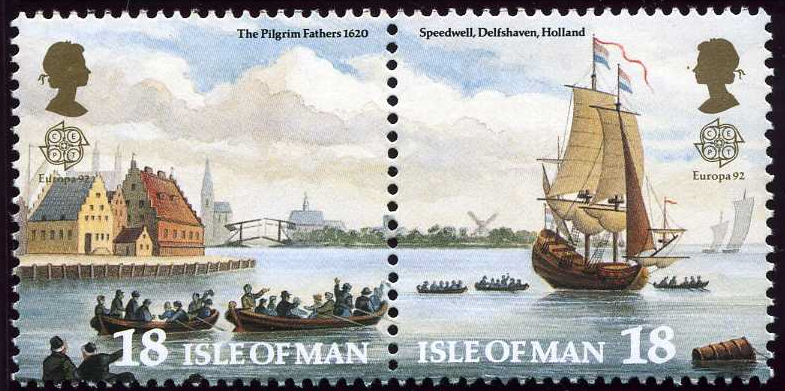
The majority of the passengers--often referred to as “Pilgrims”--were English Separatists, religious refugees who broke off from the Church of England to pursue a stricter form of worship. After first leaving England, the congregation lived in exile in Holland but left for America after arranging with investors to create their own religious colony there.
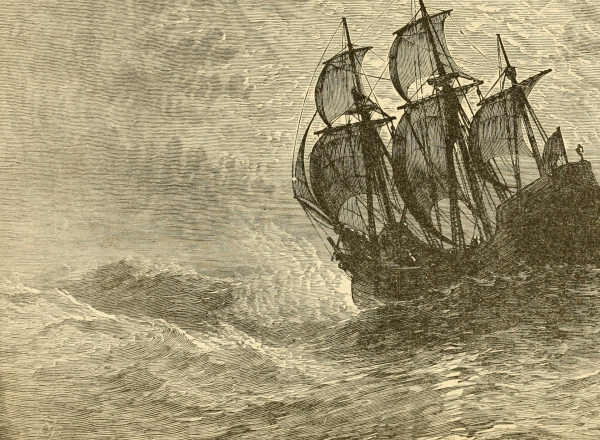
The Mayflower journey was a 65-day passage in rough seas.
The passengers sighted land on November 9, 1620.
During the voyage, John Howland was washed overboard in a storm but caught hold of a top-sail halyard and was pulled back on board.
One crew member and one passenger died before they reached land. A child born at sea was named Oceanus.
William Brewster, the senior elder and one of the most educated of the group, became the leader of the Plymouth Colony
Explore a historical timeline of the evolution of the Separatists and the Mayflower’s journey to New England
Explore the lives and legacies of some of the people who came to New England aboard the Mayflower
Who Were the Wampanoag?
The Wampanoag, whose name means “People of the First Light,” had lived across southeastern Massachusetts, eastern Rhode Island, Martha’s Vineyard, Nantucket and other islands for more than 12,000 years, and still live there today.
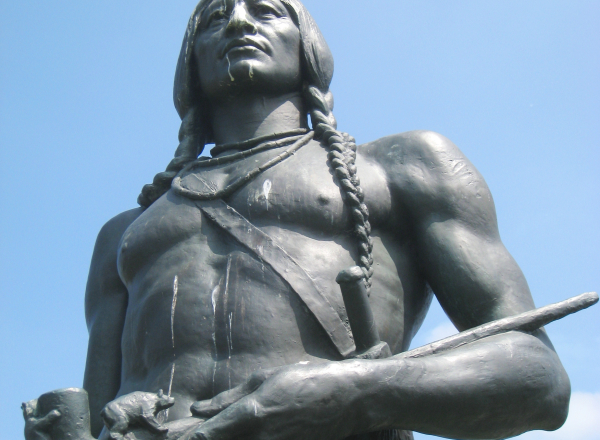
The Wampanoag moved between coastal and inland areas, fishing, hunting, and farming crops like corn, beans, and squash (the "Three Sisters").
An estimated number of 3,000 Wampanoag inhabited the region in the 1500s.
Disease, violent conflict, and cultural pressures from European setters devastated the Wampanoag’s many tribal communities
Nearly 1,000 Wampanoag still live on their aboriginal land today
The Significance of the Mayflower Compact
The first governing document of Plymouth Colony, establishing self-governance, a civil body politic, and the rule of equal laws. It was signed on November 11, 1620, by 41 adult male passengers aboard the ship. This early assertion of independence would have a formative impact, politically and culturally, on American identity.
Read the text of the Mayflower compact and see a list of the signers:
Researching Colonial New England Ancestors
American Ancestors databases, collections, and record sets can help users identify, verify, and better understand ancestors who lived in Colonial New England. Our extensive resources on Colonial New England contain millions of names, including the many descendants of early settlers of the region.
Explore Colonial New England Records
This database includes applications and supplemental applications to the General Society of Mayflower Descendants starting from their founding in 1897 for applicants who were born before January 1, 1920. In addition to the searchable database of membership applications, there is a
searchable family tree constructed for each Mayflower Passenger that can be viewed in AmericanAncesTREES. The links are in the database
description.
Contains the records of 23,593 Plymouth County probate cases filed between 1686 and 1881, contributed to American Ancestors by the Massachusetts
Supreme Judicial Court Archives. Note: Access this database for FREE with a guest account.
Study project of 17 th century New England Families, based on Clarence Almon Torrey's bibliographic index of early New England marriages. Includes Mayflower families, but not specifically identified.
Informative sources about the members of the First Church of Plymouth from the arrival of the Mayflower to the brink of the Civil War.
Includes the Mayflower passengers and other early New England Immigrants.
The town of Barnstable on Cape Cod is one of the earliest settlements in Massachusetts and home to many Mayflower families and their
descendants.
Church records indexed based on a grant from the Connecticut Society of Mayflower Descendants.
Includes Plymouth and many other towns in Massachusetts. Note: Access this database for FREE with a guest account.
Index of the fifth and sixth generation descendants from Mayflower Families Through Five Generations: Descendants of the Pilgrims who landed at Plymouth, Mass., December 1620 (AKA the Silver Books). Note: The 5 th and 6 th generation volumes are indexed.
The publication of the Society of Mayflower Descendants since 1899. Note: Index includes all years through 2010.
A compilation of approximately 37,000 known or presumed marriages that occurred prior to 1700 in New England, often called Torrey's Marriage
Index. A principal resource for seventeenth-century New England genealogy.
Over 35,000 records of service for individuals in Massachusetts who served from the seventeenth century to the Battle of Lexington and Concord.
guides
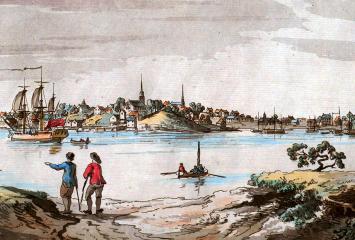
The Great Migration Project
Since 1988, the goal of The Great Migration Study Project has been to compile comprehensive genealogical and biographical accounts of the twenty thousand English men, women, and children who settled in New England between 1620 and 1640.
The project’s published works, containing thousands of sketches, are necessary resources for any genealogist, historian, or descendant with early New England interests and connections. Launched by Robert Charles Anderson, FASG, in 1988 and directed by him through February of 2025, the influence of the Great Migration Study Project on genealogy and history is vast.
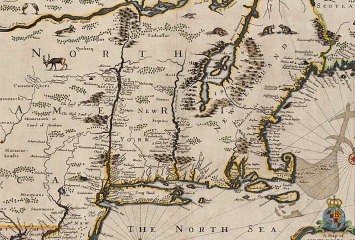
Guide to 17th Century New England Research
As a group, 17th-century New Englanders may be among the most studied group in genealogy, and their descendants have access to a multitude of printed resources. Prior to 1700, the European population of the area was still sufficiently small and compact enough to be manageable from a genealogical standpoint. In many cases, town vital records, church, colony, court, probate, land, military, and tax records have not only survived, but have been abstracted and published. This guide is intended to direct you to the most relevant and useful published and online resources for tracing your 17th-century New England ancestors.
Guide to Native Nations of New England
Native peoples were numerous, and there were many different nations who lived along the New England coast long before the Europeans arrived.
Explore the many different nations and their cultures in this guide:

Guide to Mayflower Lineages
Mayflower lineages are some of the best documented genealogies anywhere. Learn more about Mayflower family trees in this guide: